(The quality journey that makes your cup every day)
In this week's video, Ahmed Al-Hani will tell you about the journey of coffee, from seed to cup, explaining each stage in precise detail. As we promise you, we will continue to provide new videos weekly with Ahmed Al-Hani so that you can delve deeper into the world of specialty coffee.
Every detail — from the small seed inside the coffee cherry, to roasting, to extraction — has a direct impact on the quality of coffee you offer your customers.
At Marid Coffee, we live every day the details of the "coffee journey", and we treat each station as an essential step to maintain quality and consistency.
Let us take you on a tour of three main stations coffee passes through from farm to cafe, and explain how we select, test, and adjust each stage
Table of Contents
Station One: From the Tree – The Beginning of the Coffee Journey
Every journey begins at the farm, where the coffee bean is just a seed inside a fruit.
Here, our role is to choose the country, region, and tree type, because coffee flavor depends largely on the soil type, climate, and tree type planted.
As is the case with dates, when you mention Khlas Al-Ahsa or Sukari Al-Qassim, a distinct taste comes to mind.
The same applies to coffee, as each region and tree type adds its own unique imprint on the flavor.
For example:
Panama Coffee (Geisha): One of the finest coffee varieties in the world, characterized by elegant floral notes.
Colombia Coffee (Bourbon): Its flavor is balanced with clear sweetness and less floral character.
This understanding helps us choose coffee according to the character we want to present in the cup.
Processing – The Key to Flavor
After choosing the source, we move on to the processing stage, where coffee beans are separated from the fruit.
The processing method is considered the primary factor in determining the final flavor of the coffee, and there are three main methods:
Washed: Offers a clean and clear flavor, suitable for cafes looking for a balanced taste.
Honey: Combines sweetness and purity, with a medium character that suits most tastes.
Natural: Characterized by fruity flavors, sweetness, and a strong aroma.
There are also less common methods such as:
Anaerobic
Fruit Fermentation
These methods produce limited quantities and are often more expensive, targeting cafes that offer unique experiences for specialty coffee lovers.
After choosing the type and processing method, we request samples, and if the flavor and quality match the requirements, we proceed with the official order.
Journey Video
In this video, Ahmed Al-Hani takes us on a visual and detailed journey illustrating the stages of specialty coffee production from planting the seed to preparing the final cup in the cafe. The video is rich in practical information and live experiences that help coffee enthusiasts understand the importance of each step in the journey and its impact on coffee quality. Watching this video gives you a clear and comprehensive vision of how coffee beans are transformed into a unique and tasting experience.
Station Two: The Roastery – From Green to Golden
After the green beans arrive at the roastery, the roasting stage begins—and here we cannot change the quality of the coffee, but we can bring out the best in it.
We conduct multiple experiments with different profiles known as roasting profiles, with varying temperatures and times.
Then we perform Cupping (professional tasting) — a comparison session between different roasts with the same variables (same grind, water temperature, and tasting time) — to choose the best roasting profile that provides the ideal flavor balance.
The roasting stage is one of the most important stages that determines the final character of the coffee, where green beans turn golden or dark brown depending on the degree of roasting. During this process, chemical compounds within the beans react, leading to the release of distinct flavors and aromas that vary with the degree of roasting. Light roasting preserves the original flavors of the coffee and highlights acidity and fruitiness, while dark roasting increases the body and highlights smoky and caramel notes.
Roasters are keen to monitor temperatures and time precisely to ensure the ideal profile for each type of bean. They also use advanced devices to measure color and moisture to adjust the quality of roasting. This attention to detail ensures that each batch of coffee carries the same distinct taste and consistency in quality, enhancing the coffee experience for the end consumer.
Types of Coffee in Roasting
In the world of coffee, there are two main types:
Single Origin:
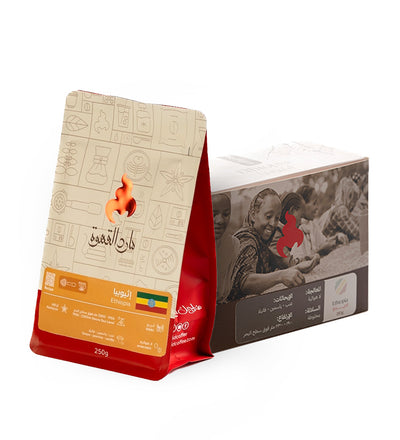
This type focuses on highlighting the characteristics of the farm and country it comes from. For example, dried Ethiopian coffee is characterized by an aromatic flavor and clear sweetness, but it may be affected by changing seasons and farm conditions.
-
Blend:
Is a mixture of beans from multiple sources to achieve flavor consistency and body balance.
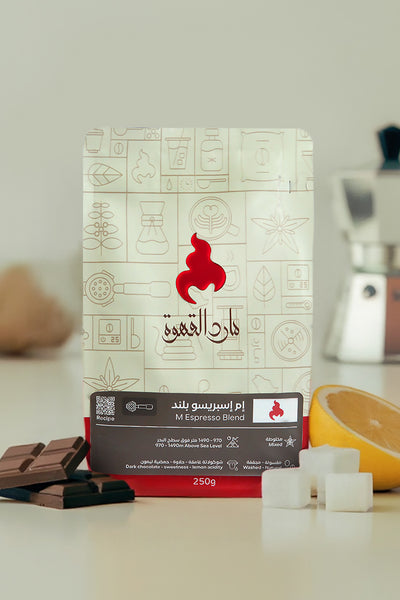
At Marid Coffee, we have the Marid blend, whose components we have been selecting for many years and consists of:
⅓ Ethiopia for aroma.
⅓ Colombia for sweetness.
⅓ Brazilian or Indian for body.
This composition ensures taste consistency throughout the year despite seasonal and crop fluctuations.
Types of Roasting Profiles
At the roastery, we usually work on three main profiles:
Espresso Roast:
A deeper roast that gives a strong flavor suitable for coffee with milk, remaining consistent and rich even after mixing.Filter or Omni Roast:
A lighter roast that highlights fruity and acidic flavors, ideal for pour-over methods like V60 or Chemex.-
Blend Roast:
Dedicated to blending, and has two types:Pre-Blend Roast: In this method, green coffee beans from different sources or types are mixed together before the roasting process, and then the mixed beans are roasted together in one batch. This method helps to integrate the flavors uniformly during roasting, resulting in a balanced and consistent blend in flavor. Marid Roastery primarily uses this method to ensure flavor balance and quality consistency in each batch, where beans are carefully selected from different sources and then blended before roasting to produce a homogeneous product that reflects the roastery's expertise in specialty coffee roasting.
Post-Blend Roast: In this method, each type of coffee bean is roasted separately according to its most suitable roasting profile, and then the roasted beans are mixed together to obtain the final blend. This method allows for precise control in highlighting the characteristics of each type of bean before blending.
What Factors Affect Coffee Flavor Consistency?
Flavor consistency is one of the key factors for the success of any cafe or brand in the coffee world.
To ensure this goal is achieved, several important factors must be considered during the roasting process, including:
Moisture level in green coffee beans before roasting.
Weight before and after roasting.
Roast Curve, which is the gradual change in temperature over time.
Bean color after roasting using precise and advanced measuring devices.
Final taste. If the previous points are accurately implemented and the measuring device readings are correct, the taste will be consistent and perfect. However, if there is any difference or problem in the readings, cupping sessions must be conducted to select the correct flavor and adjust the final taste to match the required quality.
Station Three: The Cafe – The Moment of Extraction
The final stage in the coffee journey is at the cafe, where the barista transforms all the efforts made in the previous stages into a complete cup of coffee.
In this stage, extraction is the crucial factor.
Even with high-quality coffee and perfect roasting, any error in extraction can significantly affect the taste.
Therefore, the barista must precisely control:
The amount of ground coffee.
The water ratio.
The temperature.
The extraction time.
All these factors combine to produce the "perfect cup" that keeps customers coming back.
Coffee is not just a drink, but a journey story
From the farm through the roastery to the cafe — each stage reflects passion, expertise, and a unique experience.
Every small detail makes the difference between an ordinary cup and an unforgettable special one.
Don't miss following Ahmed Al-Hani on the Marid Coffee YouTube channel to watch the full episode about the coffee journey with detailed and visual experiences:
🔗 Follow Marid Coffee on YouTube
Discover the world of specialty coffee with Marid Coffee — passion, quality, and perfection in every cup.